

Jam Bus Sandfall Walkthrough – All Levels
Read the colors. Plan the route. Let the sand flow.
Independent fan-made guides. Not affiliated with the game developer.
Browse levels
Recently updated
Sand pictures and vehicle routes

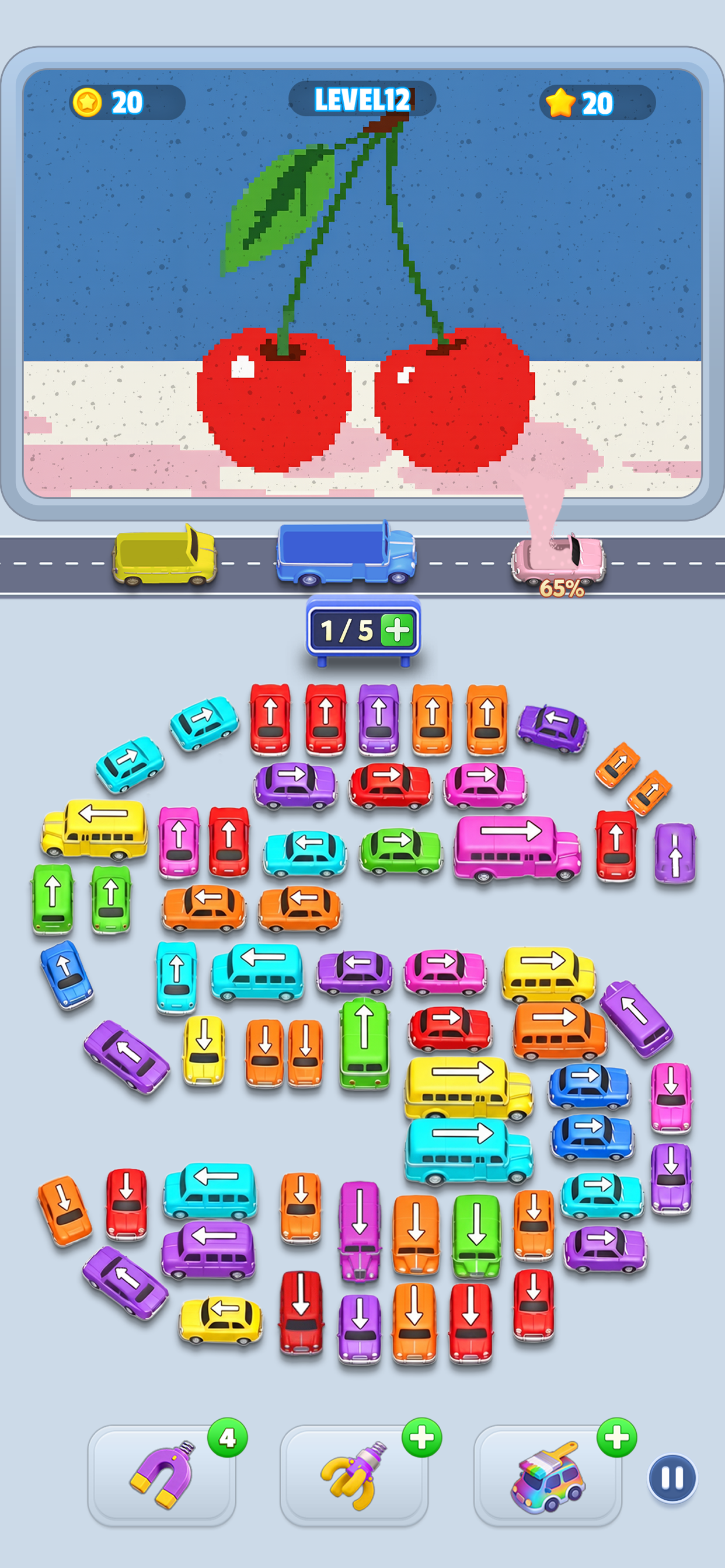
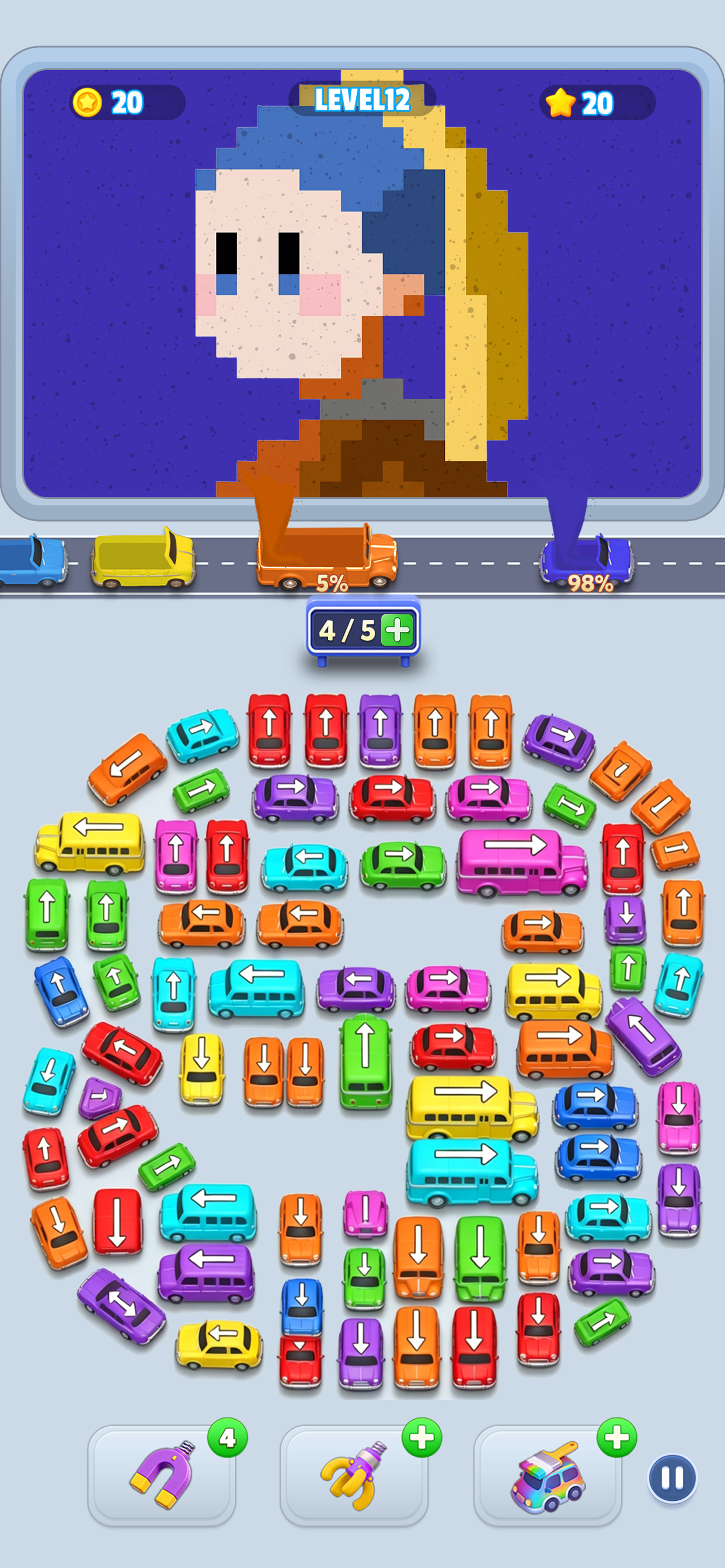
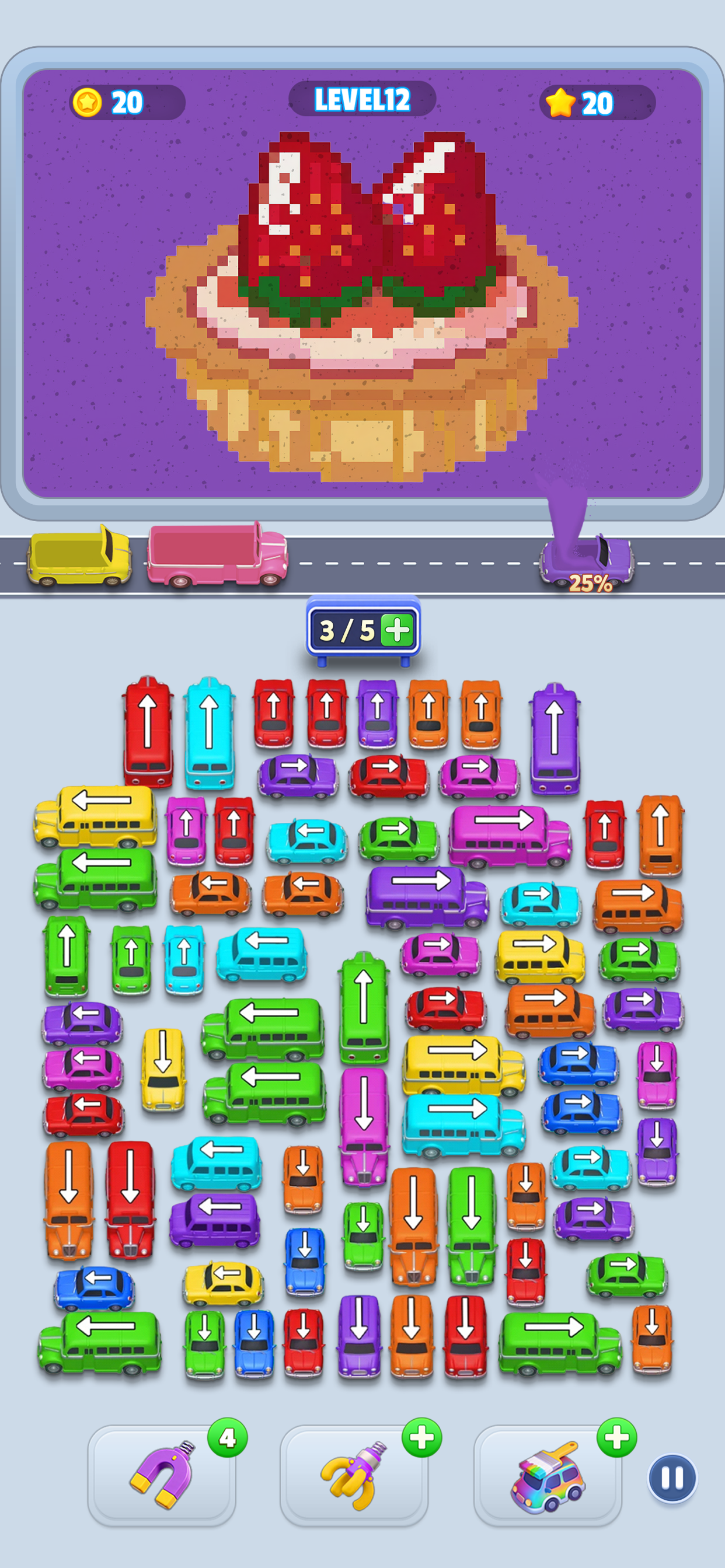
About the game
Jam Bus: Sandfall by Nova Games Technology Limited combines layered sand with a queue of colorful vehicles. Match each dispatch to accessible sand and check its direction before tapping.
Find 66 level videos below. Compare your picture and vehicle arrangement with the recording, then watch one useful move at a time.
- Publisher
- Nova Games Technology Limited
- Platform
- Android, iPhone, iPad
- Guide coverage
- 66 levels
- Last updated
- Game store
- App Store

Choose your level to watch its walkthrough. For each move, compare the sand available at the lower edge with the color and direction of a vehicle that can leave the queue. Keep room for the next useful dispatch.
A sand puzzle with a traffic problem
Jam Bus: Sandfall is a color-matching puzzle from Nova Games Technology Limited for Android, iPhone and iPad. Vehicles wait below a picture made from colored sand. Sending a vehicle out is only half the decision: its color needs useful sand to collect, and the vehicles left behind still need a way out. The result mixes parking puzzles with the changing shape of a falling-sand board. A promising move should help both areas rather than simply remove the nearest vehicle.
The picture above the road is useful information rather than decoration. Look along its lower edge, where sand can reach vehicles, before choosing a color. A large patch high in the picture may look attractive but still depend on other layers moving first. As sand drains, the accessible colors and their proportions change. Pause between choices to read that new state. A sequence that worked at the beginning of a level can become unhelpful once the bottom edge looks different.
Read the sand, then choose the vehicle
Begin with three checks: the sand that is accessible, the arrows on vehicles you can release, and the space available for vehicles already collecting. Tap a vehicle whose route is clear and whose color has a practical target. Watch what happens before sending another one. The important question is whether the move creates more options: a collecting vehicle can leave when full, another vehicle can become reachable, and a lower sand layer can open the material above it.
Avoid choosing by color alone. Two matching vehicles may have very different consequences because one opens a useful route while another traps the vehicle needed next. Likewise, an unobstructed vehicle can still be a poor choice if its sand remains buried. Think about the next move as well as the current one. When both color access and route access improve, you have a stronger reason to commit than when a move merely looks convenient.
Keep room for the next useful color
The parking counter is a planning aid. Read the number currently shown in your game and compare it with the vehicles in circulation. A vehicle that has collected only part of its load can continue to occupy useful capacity. Sending several colors with little accessible sand makes the board harder to recover. Before using the last available space, identify which waiting vehicle can actually finish and which sand color would help it leave.
Extra parking is a separate decision from choosing a route. If the game offers an additional spot, read the current reward or purchase prompt before accepting. More capacity can relieve congestion, but it does not make buried sand immediately accessible or correct a blocked vehicle route. First check whether a vehicle already moving is close to completion. If you choose to restart, remember the first decision that consumed space without making progress; that is more useful than repeating the same opening faster.
Watch what changes as sand falls
The sand board is not a fixed set of colored tiles. Removing material from a lower area changes the support beneath the rest of the picture. This can expose a different color, shift the useful collection area, or leave a small remnant that matters more than a large patch elsewhere. Reassess after a noticeable fall. Do not assume that every visible patch can be collected immediately simply because a vehicle of that color is available.
When a vehicle is nearly full, look for the remaining reachable material of its own color rather than assuming that it has stopped permanently. Compare the bottom edge and the spaces beside other colors. A new dispatch may uncover the last portion, but it may also use the capacity you need to recover. If the board seems motionless, wait briefly and check the displayed counters. Distinguish slow collection from an unavailable route before spending an item or starting again.
Use a walkthrough without losing your place
Open the page for the number shown in your game, then compare the picture, vehicle arrangement and parking counter with the video before following it. Keep the video paused while you make a decision, and resume only far enough to see the result. Trying to tap at the same speed as the recording makes it easy to miss a vehicle leaving or a layer becoming accessible. Matching the board state matters more than matching the clock.
For frequently searched levels such as 3, 5, 9, 10, 14, 15, 19, 20 and 30, use the direct links in the level index. If a recording begins with a different picture or layout, treat it as a different board even if its title has the number you expected. Updates and platform versions can change what a player sees. A useful comparison follows the visible arrangement and the order of decisions; it should not force an unrelated solution onto your current game.
Frequently asked questions
How do you play Jam Bus: Sandfall?
Tap a vehicle with a clear route and match its color to accessible sand. Let collection change the board, then choose the next vehicle while keeping parking capacity available.
Why is a matching vehicle not collecting sand?
Its color may be visible higher in the picture but unavailable at the collection edge. Inspect the lower layers and the material supporting that color before sending more vehicles.
Why does a vehicle remain partly full?
It may need more sand of its own color. Check the remaining accessible patches and the layers around them; a high percentage does not mean another color can finish the load.
What should I do when parking is full?
Inspect vehicles already collecting and look for a possible completion. Before accepting an extra-space offer, read its conditions and consider whether it solves the current color-access problem.
Can I copy a video move for move?
First compare the picture, vehicle positions and available spaces. Pause after each useful dispatch. A different layout or a recording using extra resources may require a different approach.
Where are levels 3, 5, 9 and 10?
Use the level-number search or the 1–50 index. Each available number opens a separate video page with the channel credit and short play tips.
Where can I find levels 14, 15, 19, 20 and 30?
The selected-level links and the 1–50 directory lead to these walkthroughs. Check the opening arrangement against your screen before following the video.
Does the game have a fixed published total of levels?
The guide index lists the walkthroughs available here. Its highest number describes this collection and should not be read as the total number of levels in the game.